
Introduction
Spider mites are a pest in many crops. Their great reproductive capacity enables them to cause enormous damage in a short period of time. In many protected crops the two spotted spider mite Tetranychus urticae is the most important pest. In field crops, other Tetranychus species can also cause damage.

Biology
The spider mite goes through five stages, namely egg, larva, first nymphal stage (protonymph), second nymphal stage (deutonymph) and adult. All stages can be observed in the crop.
Damage symptoms
- Spider mite larvae, nymphs and adults feed on the underside of the leaves and cause yellow spots, later even yellow leaves. This results in decreased plant growth and production. Finally the crop may die from the infestation.
- Nymphs and adults produce webbing that can cause cosmetic damage to the crop. If large numbers of spider mites are present, plants may be completely covered with webs
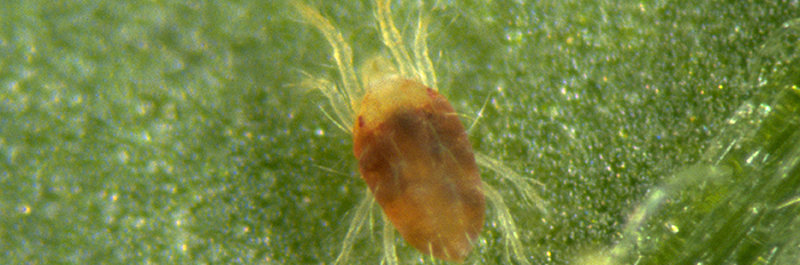
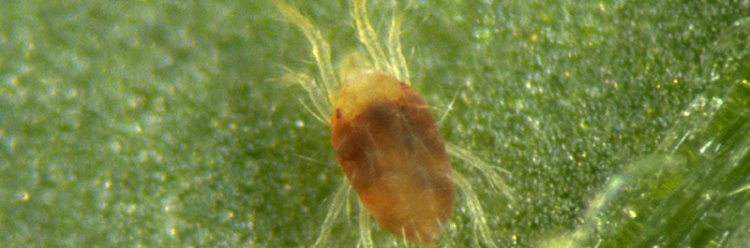
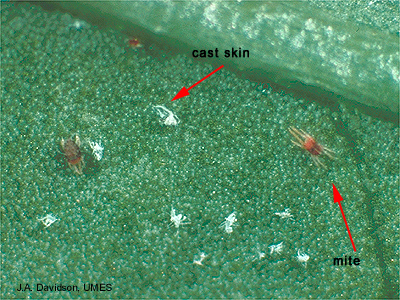
Spider mite infestations affect many crops throughout the world. With their great repro\nductive capacity they can destroy plants rapidly. Adult spider mites can be red, orange, yellow, green or brown in colour. Both males and females usually have two large black spots. That is why they are called ‘two-spotted spider mite’. Spider mites cause damage to the host plant by feeding on plant tissue and plant sap. They mainly occur on the underside of leaves where they suck out the contents of the cells. These dead cells become yellow.As damage increases whole leaves turn yellow, and eventually the plant may die. Nymphs and adults also produce webs, and plants can be completely covered by them. They can reproduce sexually as well as asexually. Eggs are laid on the underside of the leaves.The larvae that emerge from the eggs are virtually colourless with two dark red eyes. Once they start feeding they become light green, brownish yellow or even dark green. The two dark spots also develop on the middle of the body. Once sufficient food is consumed, they become inactive and develop into protonymphs. Another feeding and resting period follows, that leads to a moult. The deutonymph emerges. After another moult the adult mite appears. With each moult spider mites shed their skin. The colour of the adults often depends on the crop on which they occur. The intensive use of chemicals has led to many spider mite populations developing resistance to pesticides.
 agrobuss.com